


Contaminated Waste Disposal for Safer Properties
A black bag left after a vulnerable tenant has moved out, needles found behind a shed, or blood staining following an incident can turn an ordinary clear-out into a serious safety concern. Contaminated waste disposal is not simply a matter of putting items in a wheelie bin. It requires careful assessment, suitable protective measures, secure containment and a lawful route for disposal.
For homeowners, landlords, letting agents and commercial property managers, the priority is clear: protect anyone who may enter the property, prevent contamination spreading further and return the space to a clean, safe and usable condition. Acting quickly matters, but so does using the right level of professional support.
What counts as contaminated waste?
Contaminated waste is material that may carry infection, harmful substances or a risk of injury. The category is wider than many people expect. It can include items affected by blood or bodily fluids, used needles and sharps, drug-related debris, spoiled food mixed with biological waste, sanitary waste, animal waste, and contents from severely neglected or hoarded properties.
In some cases, the concern is visible. In others, it is not. A mattress, carpet, upholstered chair or pile of belongings may look manageable at first glance, yet absorbent materials can retain contaminants beneath the surface. Fire-damaged rooms can also contain soot and residues that need controlled cleaning and removal rather than a standard domestic clean.
The correct approach depends on the material, the amount involved, where it is located and who may have been exposed. A small, contained issue may need a very different response from a drug den clearance, trauma scene or long-term void property. That is why assessment comes before removal.
Why ordinary waste collection is not enough
Putting potentially hazardous material into household or general commercial waste can expose refuse staff, neighbours, cleaners and future occupants to avoidable risk. A bag may split, a sharp may puncture through it, or contaminated fluids may leak into a vehicle or shared bin area.
There is also a duty of care around how waste is handled and transferred. Waste producers and those arranging clearance need confidence that materials are segregated appropriately and passed to an authorised disposal route. For landlords and businesses, poor handling can create further problems with staff welfare, property insurance, complaints and reputational damage.
A professional remediation team will not treat every item as hazardous by default. That would be unnecessarily costly and wasteful. Instead, the work should be proportionate: identify what presents a risk, separate it from non-contaminated contents where safe to do so, and package or contain it correctly. This helps keep the process responsible as well as safe.
The professional contaminated waste disposal process
Specialist cleaning begins with discretion and control. The aim is to make the property safer without drawing unnecessary attention or causing further distress to residents, families or neighbours.
Assessment and risk control
Before cleaning starts, trained operatives assess the affected area and identify immediate hazards. This may include sharps, broken glass, bodily-fluid contamination, unsafe access, pests, mould, smoke residue or unstable piles of belongings. Appropriate personal protective equipment is selected for the task, and the work area may be restricted to prevent people walking contamination through the property.
This stage also establishes what can be cleaned, what must be removed, and whether other support is needed. For example, a room with a minor isolated contamination issue may be restored without removing all contents. A heavily contaminated carpet, however, may be unsuitable for treatment and need to be safely uplifted.
Safe removal and containment
Contaminated items are handled using suitable equipment and containers. Sharps should never be picked up by hand or placed loose into a bag. Soft furnishings, clothing and general contents may require separation, while liquids and heavily soiled materials need secure containment to reduce leakage and cross-contamination.
Careful handling is particularly important in communal entrances, stairwells, lifts and shared car parks. A professional team plans the removal route, protects surfaces where required and avoids turning one affected room into a wider cleaning problem.
Cleaning, disinfection and odour treatment
Waste removal alone does not make a property safe. Once affected materials have been taken away, remaining surfaces need thorough cleaning and appropriate disinfection. The method varies by surface and contaminant. Hard floors, bathroom fittings and non-porous worktops can often be treated effectively, while porous materials need closer consideration.
Odours also need more than fragrance. Nicotine, decomposition, waste and smoke odours can penetrate fabrics, flooring and voids. Effective treatment addresses the source and the affected surfaces rather than masking the smell temporarily. Where necessary, specialist equipment and targeted deodorisation are used as part of the wider restoration process.
Responsible transfer and documentation
The final part of contaminated waste disposal is ensuring waste enters the correct authorised disposal stream. This is not an afterthought. Proper disposal protects the wider community and provides reassurance that the clearance has been handled responsibly.
For landlords, agents and commercial clients, clear records can be especially useful. They help demonstrate that reasonable action was taken after an incident, before a new tenancy, or as part of a property handover. The exact documentation required will depend on the nature of the waste and the service provided.
Situations that need specialist help
Some property issues can be dealt with through careful routine cleaning. Others should not be approached without trained support. If there is any risk of a needle-stick injury, exposure to blood or bodily fluids, drug-related contamination, significant animal waste, decomposing material or an unknown substance, keep people away from the area and seek professional advice.
The same applies after a trauma, unattended death or mental-health crisis. These situations deserve a calm, respectful response. Family members, tenants and colleagues should not feel pressured to clean a distressing scene themselves. A specialist team can work discreetly, protect privacy and focus on restoring the property with compassion.
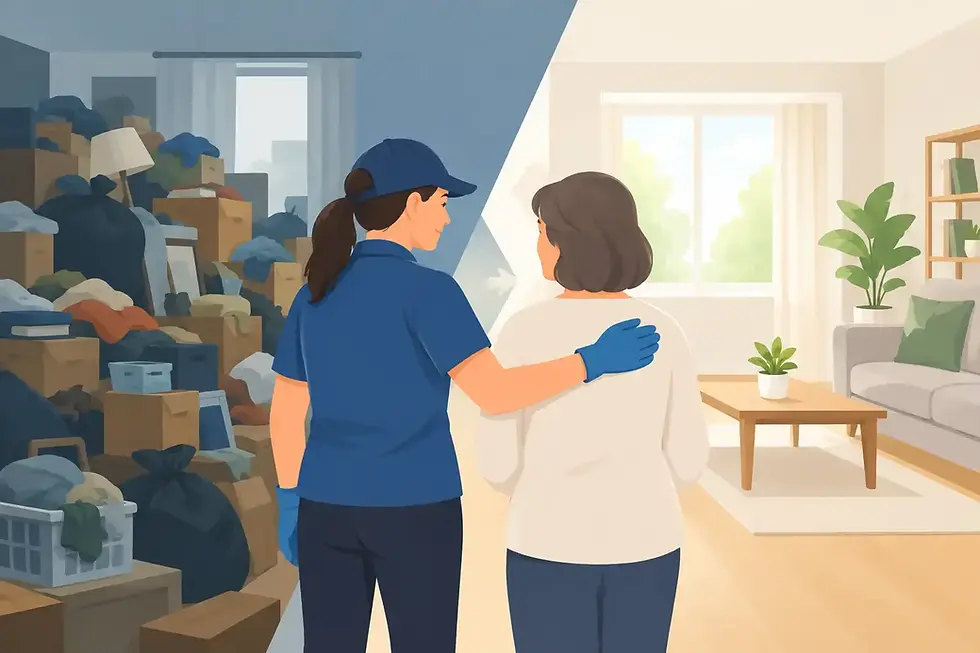
For hoarded homes and neglected void properties, the challenge is often a combination of waste, sharps, mould, pests, odours and restricted access. Clearing everything as quickly as possible is rarely the best answer. A tailored plan makes it easier to identify hazards, preserve important possessions where requested and make the space safe in manageable stages.
What property owners can do before help arrives
Do not touch unknown waste, attempt to recap needles or use a household vacuum on dry residues. Keep children, pets, tenants, staff and visitors away from the affected area. If possible, close the door or otherwise limit access without disturbing the materials.
Avoid pouring bleach or other chemicals over unknown substances. Mixing products can create fumes, and strong chemicals may damage surfaces or complicate professional treatment. Take a clear note of the location, the nature of the issue and whether anyone may have been exposed. This helps the cleaning team prepare the right equipment and make the visit more efficient.
If someone has suffered a needle-stick injury or has been exposed to a potentially infectious substance, seek appropriate medical advice promptly. Property remediation and medical care are separate matters, and both should be taken seriously.
Choosing a contaminated waste disposal provider
When the work involves health risks or a sensitive personal situation, the cheapest quote is not always the safest choice. Ask whether the provider is trained for specialist remediation, insured, equipped for the specific hazard and able to explain their process in plain English. You should also expect transparent pricing and a respectful approach to occupants and neighbours.
Local knowledge can make a real difference too. A provider serving Northamptonshire will understand the practical demands of managing access to homes, flats, rental properties, offices and commercial premises across the area. At We Clean Any Surface LTD, our trained and insured team provides tailored specialist cleaning with discretion, care and clear communication from the first call.
A contaminated property can feel overwhelming, particularly when it involves a family member, tenant or difficult incident. The right professional response brings order to the situation, protects those around you and gives the space a genuine chance to become safe and comfortable again.


Comments